
Ningbo & Tianchang · Two manufacturing bases · Shipping worldwide
Magnetic materials, Engineered to Your Spec.
NdFeB, ferrite and nanocrystalline solutions for automotive, new energy and industrial electronics.
±0.02 mm MACHININGPPAP DOCUMENTATION30+ EXPORTING COUNTRIESOEM & ODM
20+
years of team experience
2
manufacturing bases
51
part numbers in catalog
30+
exporting countries
Simulation-backed designs.
Ansys & Moldflow — verified before tooling →
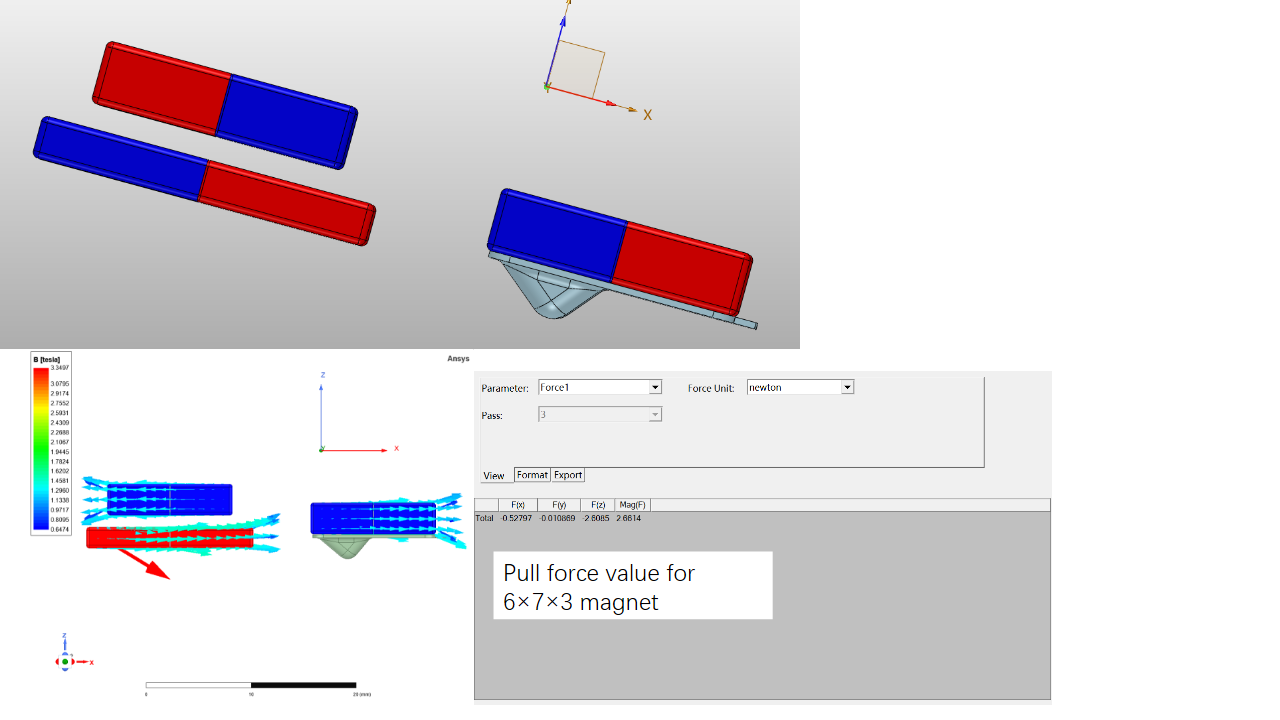
Pull-Force Simulation
Attraction force under different air gaps and assemblies — verified against your design target before tooling.
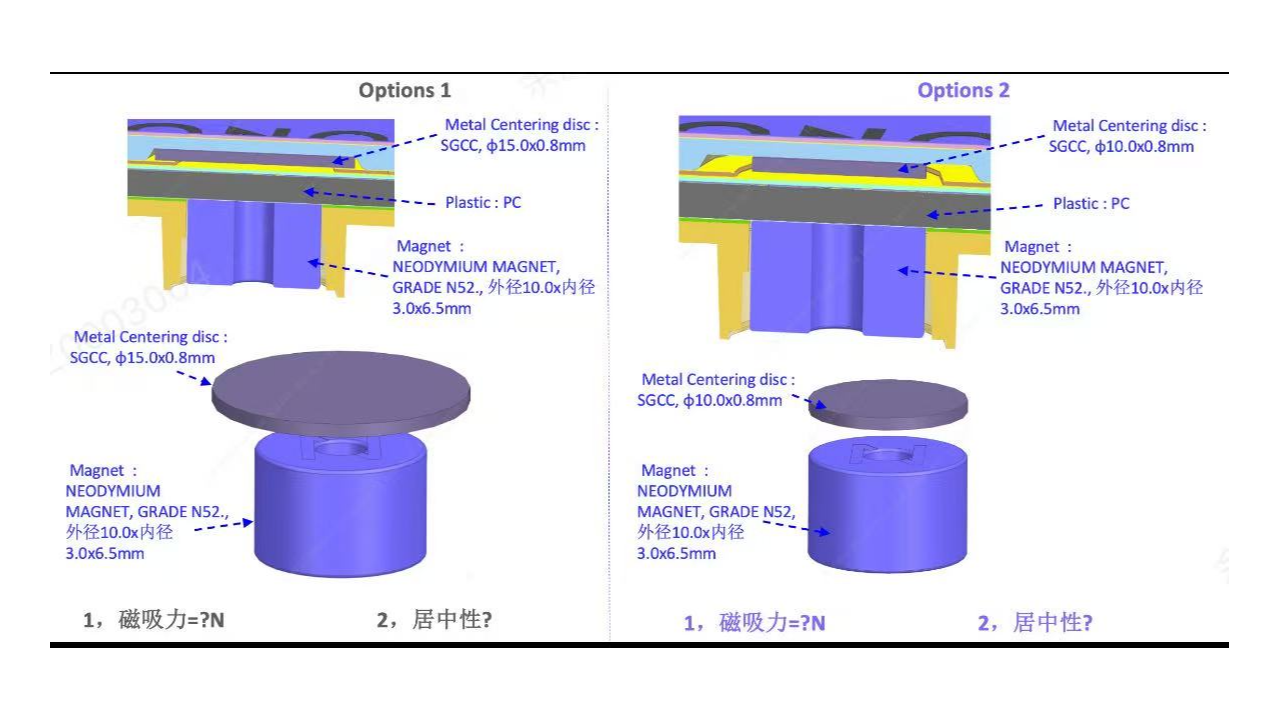
Magnetic Force Simulation
Suction force and centering behavior compared across design options — pick the variant that meets spec.
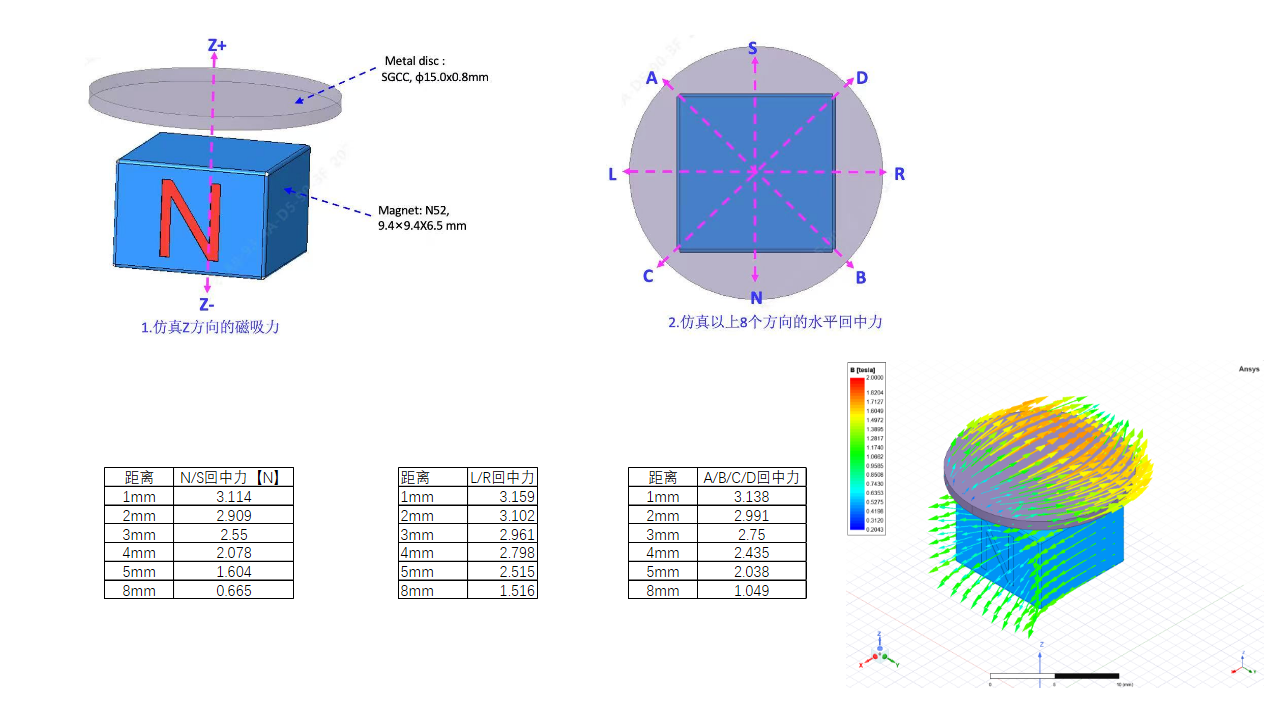
3D Field Distribution
Flux density, flux lines and multi-directional return force visualized — leakage found and fixed early.
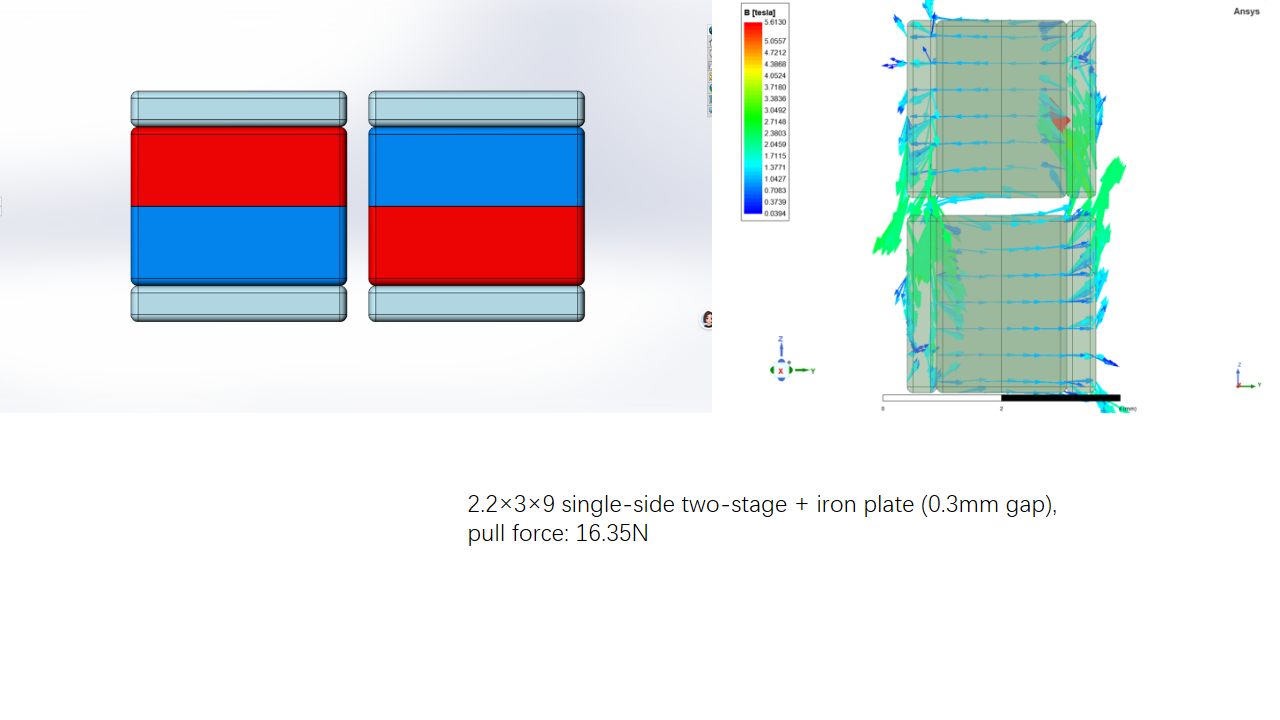
Halbach & Stack Study
Single-side two-stage stack on iron plate: 16.35 N pull force at a 0.3 mm gap, simulated in Ansys.
Browse by product line.
Pick the one on your drawing.
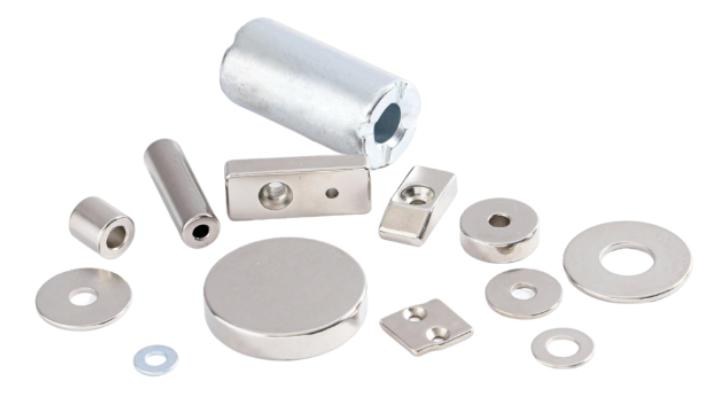
Hard Magnets30 products
Sintered, bonded and hot-pressed NdFeB engineered for high strength in compact geometries.
NdFeB MagnetsFerrite Ceramic
Explore hard magnets →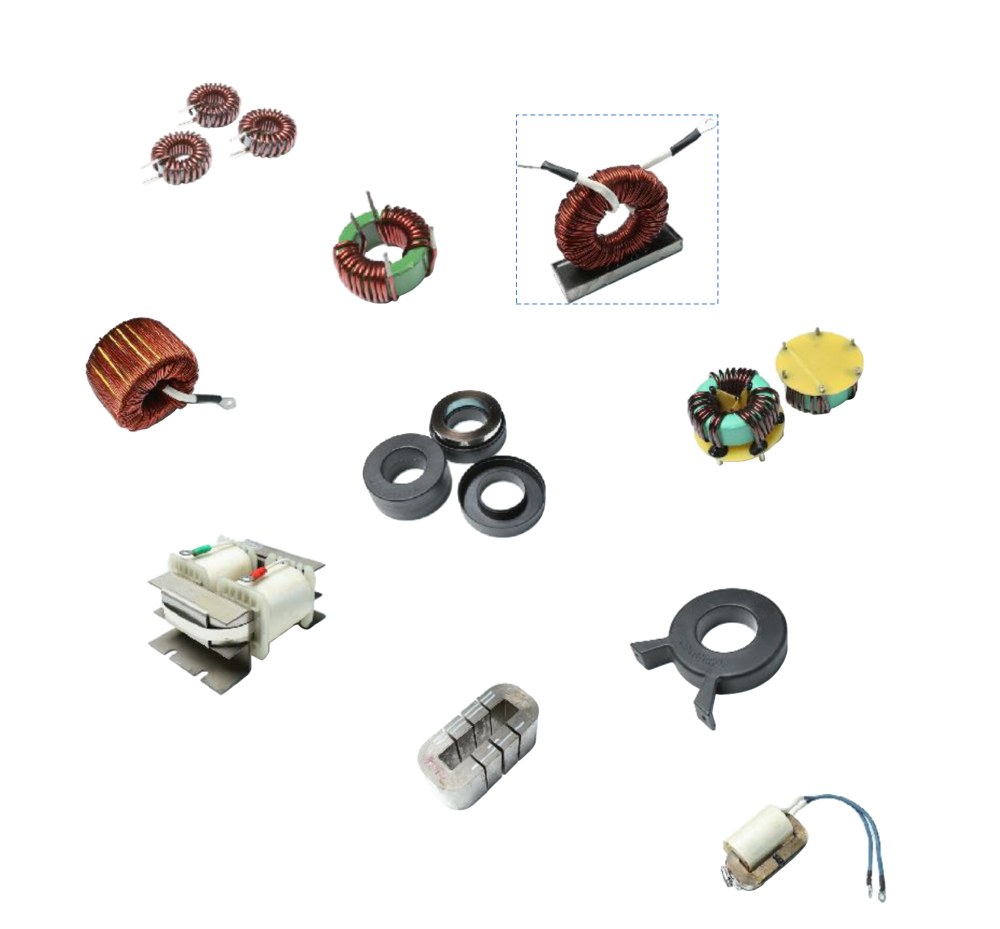
Soft Magnets17 products
MnZn / NiZn ferrite and nanocrystalline cores for transformers, chokes and EMI filtering.
Soft FerriteNanocrystalline Alloys
Explore soft magnets →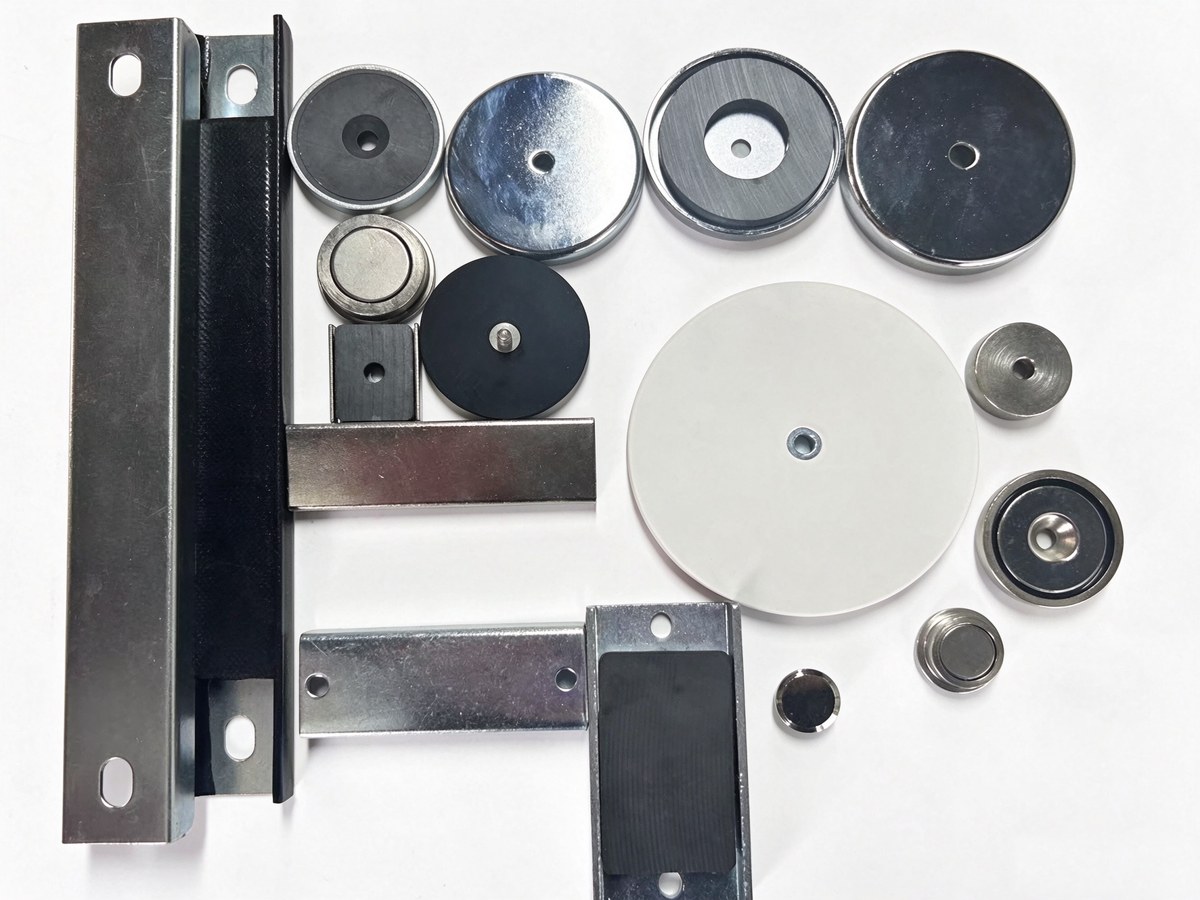
Magnetic Assemblies4 products
Rotor, sensor and holding assemblies — pre-engineered or built to your drawing.
Industrial ApplicationsConsumer ElectronicsSmart & IntelligentCustomization Services
Explore magnetic assemblies →Frequently asked.
Everything buyers ask before sending a drawing.
How to select the correct NdFeB magnet grade?
The grade mainly depends on working temperature, required magnetic flux and size limit. We consider demagnetization risk and help you balance performance and cost. Feel free to send your specs for our suggestion.
What is the difference between nanocrystalline core and MnZn ferrite core?
Nanocrystalline cores feature high saturation flux density, excellent permeability and low loss at medium frequency. MnZn ferrite cores are cost-effective and work well for high-frequency EMI suppression. We can recommend the right one based on your operating frequency and power requirements.
What's the maximum operating temperature for nanocrystalline cores?
Standard nanocrystalline cores can continuously work up to 120°C. Special grades are available for higher temperature requirements. Curie temperature is typically around 570–600°C, but magnetic performance above 120°C drifts.
What saturation flux density do you offer for soft magnetic cores?
Nanocrystalline cores reach around 1.2T, while MnZn ferrite cores are typically from 0.4T to 0.5T. Contact us for datasheets.
What materials are suitable for high frequency EMI suppression?
MnZn ferrite is ideal for high-frequency EMI filtering. Nanocrystalline cores perform better for medium frequency high-current common mode chokes.
What is Curie temperature for MnZn ferrite?
Curie temperature varies by material grade, generally between 130°C and 220°C. Above this point, the ferrite loses its magnetic property.
What is the tolerance of your ferrite core dimensions?
Standard dimensional tolerance is ±0.05mm to ±0.1mm. Tighter tolerance is available upon special request.
What files are required for custom quotation?
Please send 2D/3D drawings, target magnetic parameters, working temperature, coating requirement and estimated annual demand.
Can you provide DFM analysis for my design?
Sure. Our R&D team can conduct DFM review to check manufacturability, saturation risk and cost optimization before you finalize the design.
Can you magnetize the magnets before or after assembly?
We recommend magnetization after assembly in most cases, because magnetic field of the finished assembly can be fully verified. For large or complex fixtures, pre-magnetization is possible.
How is the pull force of a magnetic assembly tested?
We measure pull force with a calibrated force gauge on a thick steel plate under specified air gap. Typical data: holding force (kg / lbf) at 0 gap and 1mm gap.
Can you provide pull force curves or test reports for assemblies?
Yes. We can supply pull force vs air gap curves, flux density maps and application test reports. This is especially useful for your design validation.
What information do you need to quote a magnetic assembly?
Please send the 2D/3D drawing, magnet grade, coating, target holding force, operating temperature, mounting environment and annual quantity. We will then suggest cost optimization.
Can MnZn ferrite cores work under DC bias?
Yes, but DC bias will reduce effective permeability and raise saturation risk. We can provide DC bias curves for your simulation.
What test reports can you provide for MnZn ferrite materials?
We can supply B-H curve, core loss curve, permeability vs frequency and temperature characteristic reports.
What is the working temperature limit for glued magnetic assemblies?
Standard epoxy bonds are rated around 120°C. High temperature adhesives up to 150°C–180°C are available for special grades.
Do you design magnetic assemblies or just supply the magnets?
We provide full assembly service: magnet selection, steel backer / cup design, adhesive bonding, potting and finished testing. We can work from your drawing or help optimize the magnetic circuit.
Haven't found your answer?Send the drawing or question — an application engineer replies within 12 working hours.
Ask an engineer →Send your drawing<em style="color:#FFB38A">.
Material options · honest lead times · DDP shipping — engineer replies in 12 working hours